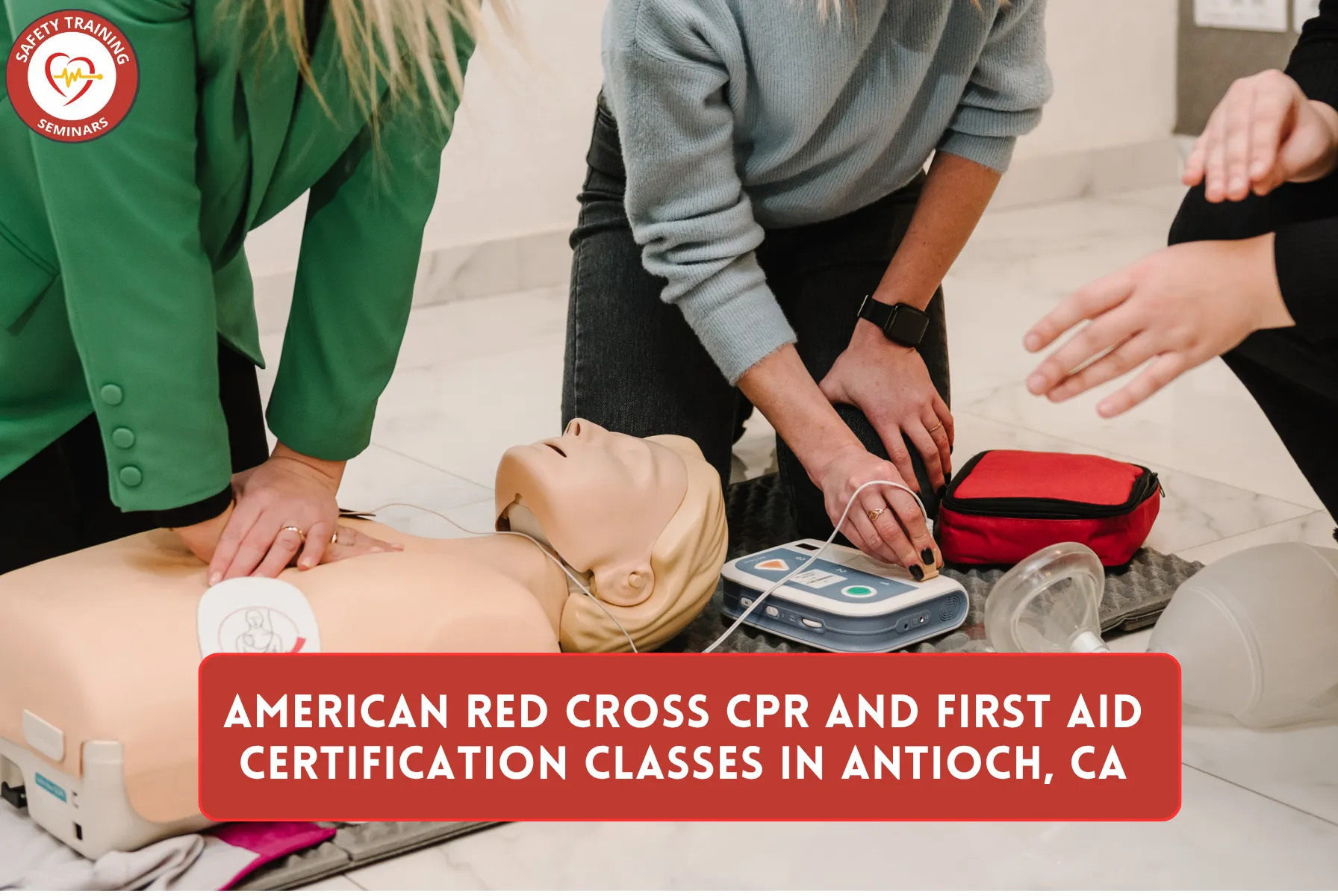
Along the Lone Tree Way corridor and throughout Contra Costa County, plenty of Antioch residents reach a point where a job offer, a school program, or a family responsibility asks them to hold current CPR or First Aid training. American Red Cross CPR and First Aid certification classes are built for exactly that moment. These courses teach people how to recognize a cardiac or medical emergency, perform chest compressions and rescue breaths, use an automated external defibrillator (AED), and respond to common injuries until professional help arrives. In Antioch, the people looking for this training tend to include hospital and clinic staff near Sutter Delta and Kaiser, teachers and childcare workers across the district, coaches, caregivers, and employees whose workplaces keep a trained responder on site. If you’re one of them, the useful first step is matching the right course to the reason you need it.
Quick Answer
People searching in Antioch can enroll in American Red Cross CPR and First Aid training that fits a specific purpose, whether that’s a healthcare role, a workplace safety assignment, a childcare or teaching position, or personal readiness at home. The course you choose depends on what your employer, school, or licensing body actually asks for, so confirm that requirement before you register.
What American Red Cross CPR and First Aid Classes Cover
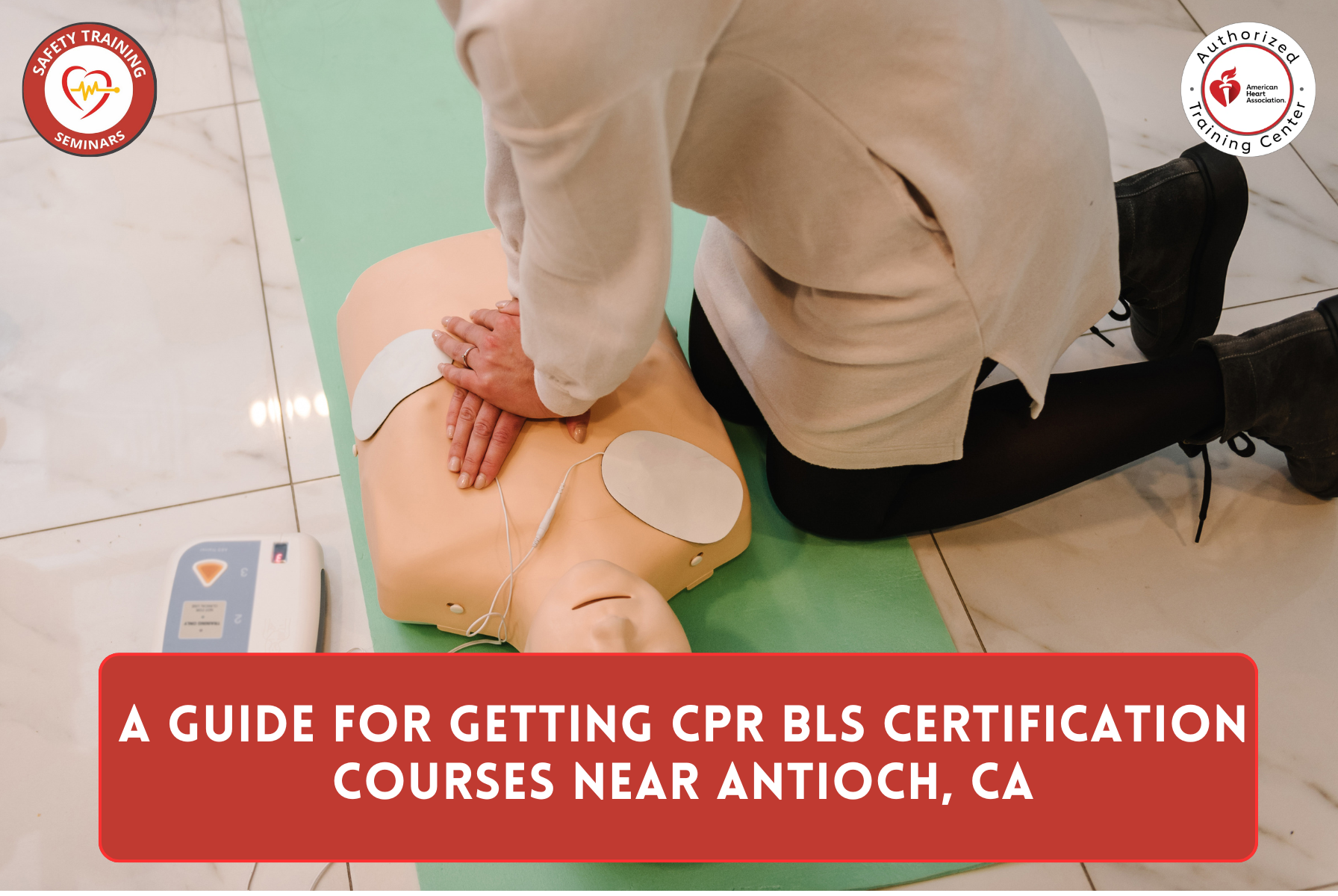
CPR training teaches you to respond when someone’s heart stops or their breathing fails. You learn to check for responsiveness, call for help, deliver chest compressions, and give rescue breaths, often paired with instruction on how an AED restarts a normal heart rhythm.
First Aid training covers a wider range of situations that don’t involve cardiac arrest, such as bleeding, burns, sudden illness, and other injuries someone might face before paramedics arrive. Because emergencies rarely announce which category they fall into, the two subjects are frequently taught side by side.
AED training usually appears within CPR or combined courses rather than as a separate track, since defibrillator use and chest compressions work together during a cardiac emergency. Many American Red Cross classes include hands-on practice, which matters when a role expects you to demonstrate real skill rather than only pass a knowledge check. Course content, format, and length differ from one class to another, so it’s worth verifying the details before you sign up.
CPR Training in Antioch
For Antioch residents, CPR classes tend to fall into two groups: courses for the general public and courses geared toward professional or workplace requirements. Depending on the class, CPR instruction may address adult CPR, child CPR, and infant CPR, since the technique changes with the size and age of the person.
A parent in a Somersville or Mira Vista neighborhood might focus on infant and child CPR, while an employee designated as a workplace responder may need a course that documents completion for OSHA-related purposes. Some classes fold in AED practice and choking response as well. What a given course includes depends on the specific American Red Cross class you select, so read the description and match it to your situation. Anyone weighing local CPR training options should look closely at whether the class offers the hands-on component their role expects.
First Aid and AED Training in Antioch
First Aid rounds out what CPR alone doesn’t cover. A cardiac emergency is one scenario; a fall on a job site, an allergic reaction at a daycare, or a heat-related illness during a summer shift are all situations First Aid training helps you handle.
The audiences that benefit tend to be broad: teachers and after-school staff, childcare providers, youth sports coaches, fitness instructors, warehouse and retail employees, family caregivers, and community volunteers. AED awareness fits naturally into this picture, since public buildings, gyms, and workplaces increasingly keep a defibrillator on hand and want staff who know how to use it. When you’re comparing combined First Aid and AED training in Antioch, check whether the course scope lines up with the emergencies you’re most likely to face in your role.
Who Typically Takes CPR and First Aid Classes?
Healthcare and medical personnel. Staff and students connected to facilities like Sutter Delta Medical Center or Kaiser Permanente Antioch often need current CPR training, though the exact level varies by position.
Teachers and childcare providers. Schools within Antioch Unified and licensed childcare settings may require or prefer CPR and First Aid training for certain staff.
Workplace employees. Businesses along Lone Tree Way and the Highway 4 corridor sometimes designate trained responders to meet safety expectations.
Coaches and fitness professionals. People leading youth sports or gym sessions in Antioch benefit from knowing how to respond to injuries and cardiac events.
Parents and caregivers. Families and those caring for older relatives often take these classes purely for home readiness.
Students. Nursing, EMT, and other program applicants may need certification for clinical placements or employment. Requirements aren’t universal, so confirm yours directly.
How to Choose the Right CPR and First Aid Course
The most common mistake is registering for a class that doesn’t satisfy the actual requirement. Use the table below as a starting point, then verify the specifics.
| Training Type | Typical Use |
| CPR | CPR-focused emergency-response training |
| First Aid | Response to common injuries and medical emergencies |
| CPR/AED | Combines CPR education with AED-related training |
| First Aid/CPR/AED | Broader emergency-response training across multiple areas |
This table is a guide, not a legal or employment standard. Before you register, check the precise requirement with your employer, your school, your healthcare organization, a licensing or professional board, or your workplace safety coordinator. A few minutes of confirmation can save you from repeating a course that didn’t count.
Local Antioch Training Considerations
Antioch sits at the eastern edge of Contra Costa County, roughly 36 miles northeast of San Francisco, along the San Joaquin River in the Delta region. That geography shapes who looks for training here. The city grew from a coal-mining town into a diverse suburban community with residential, commercial, and industrial pockets, and its healthcare presence has expanded alongside that growth.
Because Antioch anchors far East County, many residents would rather train locally than drive toward central Contra Costa or across the county line. The Antioch–Pittsburg BART extension and Highway 4 connect the city to the wider Bay Area, but for CPR and First Aid, staying close to home is simply more practical. Neighboring communities like Pittsburg, Oakley, and Brentwood share that same East County convenience factor, which is why nearby residents often look toward Antioch for accessible CPR and BLS classes. Healthcare staff, school employees, childcare workers, and local business teams make up much of the demand.
Safety Training Seminars in Antioch
For people in and around the city, Safety Training Seminars operates a local training location in Antioch, CA:
Safety Training Seminars – Antioch CPR Training Center: 3701 Lone Tree Way, Suite 4A, Antioch, CA 94509
Sitting on Lone Tree Way places the center within the same corridor as much of Antioch’s medical and retail activity, which is convenient if you already pass through the area for work or errands. Before registering, review which course matches your purpose, what format the class uses, and whether it includes the hands-on practice your role expects. If you want a fuller picture of available options in the region, the overview of Antioch CPR, BLS, ACLS, and PALS classes can help you see how course types line up with different needs. Confirming your requirement first keeps enrollment straightforward.
Why Consider Safety Training Seminars for CPR and First Aid Training in Antioch
Residents weighing their choices may find a few practical reasons to look here. There’s a local training location within Antioch itself, which cuts down on travel for East County residents. The center offers CPR and First Aid course options, along with related training categories for those who need more advanced coursework. Its position on Lone Tree Way makes it reachable for people already in the medical and commercial part of town. And course and registration information is available to review in advance, so you can match a class to your actual requirement before committing.
Frequently Asked Questions
What CPR classes can I find in Antioch?
Antioch offers American Red Cross CPR options that generally include adult, child, and infant CPR, often paired with AED training. Some classes serve the general public while others target workplace or professional needs. The exact content depends on the specific course, so review the class description and confirm it matches what your job, school, or organization asks for before registering.
Does First Aid training include CPR?
Not always. First Aid and CPR are separate subjects that are often bundled together but can also be taken on their own. If you need both, look for a combined First Aid/CPR/AED course. If your requirement is CPR only, a standalone CPR class may be enough. Check the exact wording of your requirement to avoid enrolling in the wrong option.
Do teachers and childcare workers in Antioch need this training?
Often, yes. Many schools within Antioch Unified and licensed childcare settings require or strongly prefer current CPR and First Aid training for certain roles. Requirements differ by employer and by the type of position, so childcare and education staff should confirm with their school or licensing agency exactly which certification is expected.
Will my Antioch employer accept American Red Cross training?
Many employers accept American Red Cross CPR and First Aid certification, but acceptance isn’t guaranteed across every workplace or profession. Some roles specify a particular course level or format. The reliable step is to ask your employer or workplace safety coordinator which training they recognize before you register, so your certification counts when you need it.
Is hands-on practice part of these courses?
It can be, and it often matters. Roles that expect you to physically demonstrate CPR or AED use usually call for a class with an in-person skills component rather than knowledge-only instruction. Because formats vary between classes, verify that the course you choose includes the hands-on practice your position or program requires.
Where should Antioch residents start looking for local training?
Start by identifying why you need the training, then match that reason to a course type. From there, look for a local training location in Antioch so you’re not commuting across the county. Reviewing course and registration details in advance, and confirming your specific requirement, helps you pick the right class the first time.
Conclusion
The short version: CPR training prepares you to respond when someone’s heart or breathing stops, while First Aid training covers a broader set of injuries and medical situations, and AED skills tie into both. Choosing the course that actually matches your role matters more than choosing the longest or shortest one. For people across Antioch and the wider East County, Safety Training Seminars offers a local option for American Red Cross CPR and First Aid training on Lone Tree Way, making it easier to train close to home. Before you register, take a moment to confirm what your employer, school, or organization requires, then select the class that meets it. That small check keeps your certification useful the day you actually need it.